Rav Yehuda Silman (Yeschurun 15): Question: Is it permitted to kill someone that there are doubts whether he is in fact a rodef (threat to life)? I was asked concerning a security guard in a public place e.g., the entrance of a restaurant or a mall who notices a man approach and he appears suspicious. The person is acting strangely and appears to be an Arab. When the security guard approaches him, he begins to run. The security guards suspects that he is a terrorist. This is only a suspicion since it is possible that he is in fact a Jew and there are people in the world who act strangely. In addition it is possible that the suspicious stranger is running away simply out of panic. However it is possible that in a short time the stranger will in fact cause a serious terror attack. Is it permitted to kill the stranger when the facts are not clear? This is a common question and a similar question can be asked regarding a bank teller who is suddenly confronted with a bandit with a pistol in his hand. There are many times when it is later determined that the gun was only a toy and even if it were real the bandit didn’t intend to kill but only to scare the bank teller. Nevertheless there is a doubt whether the person is in danger. In such circumstances is it permitted to kill him? Answer:… Conclusions: 1) It appears that we hold in practice that it is permitted to killed a suspected rodef. In other words someone who is doing activities that endanger others even if there are doubts. … 4) Therefore in the two versions of the question that were asked concerning a suspicious person it is permitted to kill him. That is only in a case there are valid bases to suspect that he is trying to kill. 5) In contrast in the case of someone running in the forest or is shooting and there are doubts as to his intent[ - he is not to be viewed as a rodef because we assume he has a legitimate reason for doing these things (chezkas kashrus).
Thursday, April 21, 2011
Suspected rodef - defensive behavior when it is possible but not certain someone is a threat
Rav Yehuda Silman (Yeschurun 15): Question: Is it permitted to kill someone that there are doubts whether he is in fact a rodef (threat to life)? I was asked concerning a security guard in a public place e.g., the entrance of a restaurant or a mall who notices a man approach and he appears suspicious. The person is acting strangely and appears to be an Arab. When the security guard approaches him, he begins to run. The security guards suspects that he is a terrorist. This is only a suspicion since it is possible that he is in fact a Jew and there are people in the world who act strangely. In addition it is possible that the suspicious stranger is running away simply out of panic. However it is possible that in a short time the stranger will in fact cause a serious terror attack. Is it permitted to kill the stranger when the facts are not clear? This is a common question and a similar question can be asked regarding a bank teller who is suddenly confronted with a bandit with a pistol in his hand. There are many times when it is later determined that the gun was only a toy and even if it were real the bandit didn’t intend to kill but only to scare the bank teller. Nevertheless there is a doubt whether the person is in danger. In such circumstances is it permitted to kill him? Answer:… Conclusions: 1) It appears that we hold in practice that it is permitted to killed a suspected rodef. In other words someone who is doing activities that endanger others even if there are doubts. … 4) Therefore in the two versions of the question that were asked concerning a suspicious person it is permitted to kill him. That is only in a case there are valid bases to suspect that he is trying to kill. 5) In contrast in the case of someone running in the forest or is shooting and there are doubts as to his intent[ - he is not to be viewed as a rodef because we assume he has a legitimate reason for doing these things (chezkas kashrus).


Dangers of selling (giving away) chametz - actualized
JPOST
Kikarhashabbat
As reported by haredi media outlets, members of the Mishkenot Yaakov community in the capital’s Ramat Shlomo neighborhood were encouraged by their Rabbi Simcha Rabinowitz to take the tradition one step further, and rather than selling the hametz, actually give it to the non-Jew, who would presumably return it after the holiday.
Many people chose to put their products – including expensive alcoholic beverages – in the room destined for the hametz, believing that such an act would be a higher degree of observing the holiday’s prohibition of not owning leavened products.
After the transaction took place and shortly before the holiday began, however, the gentile arrived with his vehicle and proceeded to take the goods, which were legally his. Objecting to his actions was not an option, since that would prove that the deal was not sincere, which would mean that the hametz would have belonged to the Jews.
Many people chose to put their products – including expensive alcoholic beverages – in the room destined for the hametz, believing that such an act would be a higher degree of observing the holiday’s prohibition of not owning leavened products.
After the transaction took place and shortly before the holiday began, however, the gentile arrived with his vehicle and proceeded to take the goods, which were legally his. Objecting to his actions was not an option, since that would prove that the deal was not sincere, which would mean that the hametz would have belonged to the Jews.
Kikarhashabbat
תושבי רמת שלמה הופתעו: הגוי החליט לממש את זכותו
מקרה לא-נעים בשכונת רמת שלמה בירושלים, כאשר עשרות אנשים הפסידו את מיטב "חמצם", לאחר שהגוי מימש את זכותו ולקח את החמץ לעצמו ● בכניסת החג, הגיע הגוי עם רכבו והחליט לממש את המתנה שקיבל, הוא פתח את החדר בו הופקד החמץ של התושבים, ונעלם ● פרסום ראשון (זמנים, פסח
)
מקרה לא-נעים בשכונת רמת שלמה בירושלים, כאשר עשרות אנשים הפסידו את מיטב "חמצם", לאחר שהגוי מימש את זכותו ולקח את החמץ לעצמו ● בכניסת החג, הגיע הגוי עם רכבו והחליט לממש את המתנה שקיבל, הוא פתח את החדר בו הופקד החמץ של התושבים, ונעלם ● פרסום ראשון (זמנים, פסח
)
Monday, April 18, 2011
Hooked on Addiction: From Food to Drugs to Internet Porn
America is having an addiction moment. Media headlines scream daily about new neuroscience findings on porn addiction, Internet addiction, food addiction and plain, old-fashioned drug addiction. As TIME's Michael Scherer wrote last week, 42 U.S. Senators called on Attorney General Eric Holder to increase obscenity prosecutions for pornography, due in part to fears over sex addiction. There's even a new online magazine about addiction called The Fix (full disclosure: I write for it).
But what do the recent neuroscience studies actually tell us about addiction? What is addiction really?
The Santa Monica bomber test - halachic clarity vs confusion
I recently discovered a very simple test of whether a person will report child abuse. Or rather whether he is so tied up in knots about the complexities of halacha and the horror of mesira that he would not call the police unless a godol gave him permission.
The test is the story of the confused Jewish individual who exploded a bomb at the Santa Monica shul and then escaped to Denver where he was recognized by a rabbi who then called his rabbi for permission to call the police.
The test consists of "What would you do if you recognized the Santa Monica bomber - would you call the police or call your rabbi for permission to call the police."
One answer I got - "You can't really trust the police - after all look at the harsh sentence that Rubashkin got. You have to consider all sides of the issue and a godol would know best what to do. Perhaps the guy just needed some therapy and understanding."
The test illustrates the need for our educational system and rabbonim to educate the community in the laws of pikuach nefesh and rodef. Issues which often do not allow time for a telephone call. This is no different than teaching the issue of pikuach nefesh for Shabbos. One case I heard was of a avreich whose baby developed a fever of 105 over Shabbos. He read through Shmiras Shabbos and concluded that it was permitted but didn't feel comfortable about calling the doctor. After Shabbos he went to the doctor and was told that his child was brain damaged. In a state of shock and depression he went to speak to Rav Moshe Feinstein - "How can this happen? I just wanted to sure to avoid avoid chilul Shabbos. Rav Moshe was very upset and told him - "the halacha is very clear that this was a life threatening situation - there was no heter of being frum at the expense of your child."
How to explain child abuse by Orthodox Jews - to secular therapists?
I was asked to give a speech at a major conference on the issue of child abuse in the Orthodox community. The conference is being held for secular psychotherapists who deal with this issue daily. It will be in a month
I was not asked to speak as a therapist but rather as an Orthodox Jew. This is an interesting and important challenge since these therapists have a significant number of Orthodox patients and clearly would like a better understanding of the dynamics of this issue. Many of the therapists are Jewish but very few are observant. A number of them come from Orthodox backgrounds - but are now secular.
I would appreciate suggestions and insights which you think might be important to get across to an audience that will be polite but not sympathetic to the dynamics of the Orthodox community. What would you say if you had this opportunity?
===============
I'd also like to report the fact that my books on abuse are selling in Jewish books stores without significant opposition - contrary to everyone's prediction.. Eichler's of Flatbush just told me that it is selling well and that they just reordered. The world has changed - but still has a way to go.
Rav Chaim Brisker - . Amora has the power to argue with a Tanna
Contrary to the view of the Kesef Mishna and clearly at variance with Rav Elchonon Wasserman that the authority of a Tanna is that of Sanhedrin which an Amora can not reject. And also in disagreement with the Chazon Ish that the Tanna had greater knowledge of the truth than an Amora - is Rav Chaim Brisker's view that theoretically an Amora can disagree with a Tanna but in general don't.
Rav Elchonon Wasserman[i](Kovetz Shiurim Bava Basra 170a #633): Rav said that the halacha is neither that of R’ Yehuda nor of R’ Yochanon. The Rashbam said that Rav was considered a Tanna and thus could disagree with other Tanaim. However Tosfos (Kesubos) says that R’ Yochanon disagreed with this halacha and since we have a rule that in a dispute between Rav and R’ Yochacon that we rule in accord with R’ Yochanon that means that Rav is not viewed as a Tanna and thus cannot argue with Tannaim. But this presents a question. How can it be that Rav is disagreeing with the Mishna here? This question I asked my teacher R’ Chaim Brisker and he answered, “That in truth an Amora has the power to disagree with a Tanna. This that we regularly find the Talmud rejecting the views of an Amora by simply showing that a Tanna rejects it – that is because as a general rule an Amora did not disagree with a Tanna. So if the Amora only knew the view of the Tanna we assume he would not disagree with it. However where we see that an Amora explicitly disagrees with a Tanna it is possible that the final halacha is in agreement with the Amora.”
Sunday, April 17, 2011
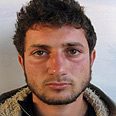
Itamar massacre solved; 2 arrested
.
via ynet - News on 4/17/11
Subscribe to:
Posts
(
Atom
)